

Micotil
Banned
- Joined
- Nov 13, 2010
- Messages
- 895
- Reaction score
- 151
- Points
- 18


P. W. Price (Author), R. F. Denno (Author), M. D. Eubanks (Author), D. L. Finke (Author), I. Kaplan
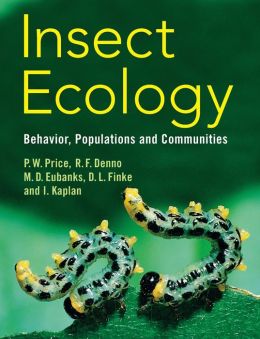
Combining breadth of coverage with detail, this logical and cohesive introduction to insect ecology couples concepts with a broad range of examples and practical applications. It explores cutting-edge topics in the field, drawing on and highlighting the links between theory and the latest empirical studies. The sections are structured around a series of key topics, including behavioral ecology; species interactions; population ecology; food webs, communities and ecosystems; and broad patterns in nature. Chapters progress logically from the small scale to the large; from individual species through to species interactions, populations and communities. Application sections at the end of each chapter outline the practicality of ecological concepts and show how ecological information and concepts can be useful in agriculture, horticulture and forestry. Each chapter ends with a summary, providing a brief recap, followed by a set of questions and discussion topics designed to encourage independent and creative thinking.
[h=3]Table of Contents[/h] Preface;
Part I. Introduction:
1. The scope of insect ecology;
Part II. Behavioral Ecology:
2. Behavior, mating systems, and sexual selection;
3. Social insects: the evolution and ecological consequences of sociality;
Part III. Species Interactions:
4. Plant and herbivore interactions;
5. Lateral interactions: competition, amensalism, and facilitation;
6. Mutualisms;
7. Prey and predator interactions;
8. Host and parasite interactions;
Part IV. Population Ecology:
9. Demography, population growth and life tables;
10. Life histories;
11. Population dynamics;
Part V. Food Webs and Communities:
12. Community structure;
13. Multi-trophic interactions;
Part VI. Broad Patterns in Nature:
14. Biological diversity;
15. Planet Earth: patterns and processes;
Glossary;
- Paperback: 812 pages
- Publisher: (September 30, 2011)
- Language: English
- ISBN-10: 052154260X
- ISBN-13: 978-0521542609
Combining breadth of coverage with detail, this logical and cohesive introduction to insect ecology couples concepts with a broad range of examples and practical applications. It explores cutting-edge topics in the field, drawing on and highlighting the links between theory and the latest empirical studies. The sections are structured around a series of key topics, including behavioral ecology; species interactions; population ecology; food webs, communities and ecosystems; and broad patterns in nature. Chapters progress logically from the small scale to the large; from individual species through to species interactions, populations and communities. Application sections at the end of each chapter outline the practicality of ecological concepts and show how ecological information and concepts can be useful in agriculture, horticulture and forestry. Each chapter ends with a summary, providing a brief recap, followed by a set of questions and discussion topics designed to encourage independent and creative thinking.
[h=3]Table of Contents[/h] Preface;
Part I. Introduction:
1. The scope of insect ecology;
Part II. Behavioral Ecology:
2. Behavior, mating systems, and sexual selection;
3. Social insects: the evolution and ecological consequences of sociality;
Part III. Species Interactions:
4. Plant and herbivore interactions;
5. Lateral interactions: competition, amensalism, and facilitation;
6. Mutualisms;
7. Prey and predator interactions;
8. Host and parasite interactions;
Part IV. Population Ecology:
9. Demography, population growth and life tables;
10. Life histories;
11. Population dynamics;
Part V. Food Webs and Communities:
12. Community structure;
13. Multi-trophic interactions;
Part VI. Broad Patterns in Nature:
14. Biological diversity;
15. Planet Earth: patterns and processes;
Glossary;